
Why More People Are Choosing Their Own Cloud Storage Over Public Clouds
Cloud storage has become so common that most people rarely think about where their files actually live.
Photos, documents, videos, backups, and even business data are routinely uploaded to the cloud, accessible from anywhere with an internet connection. The convenience is undeniable.
Yet more users are beginning to explore whether maintaining their own cloud storage could offer greater control over how their data is stored and managed.
This convenience often comes with a trade-off that goes unnoticed. Someone else owns the storage infrastructure and governs access through their platform. Pricing, policies, and limits can change over time.
Whether it’s for privacy, long-term cost savings, or greater control over personal data, the idea of owning storage instead of renting it is gaining momentum among individuals and businesses alike.
Understanding the Difference Between Public and Private Cloud Storage
At first glance, public and private cloud storage can seem similar. Both allow users to store files, access them remotely, synchronize data across devices, and maintain backups.
The difference is not what they do. The difference is who controls them.
With a public cloud service, users store their data on infrastructure owned and managed by a third-party provider. The provider determines storage plans, pricing structures, feature availability, and service policies.
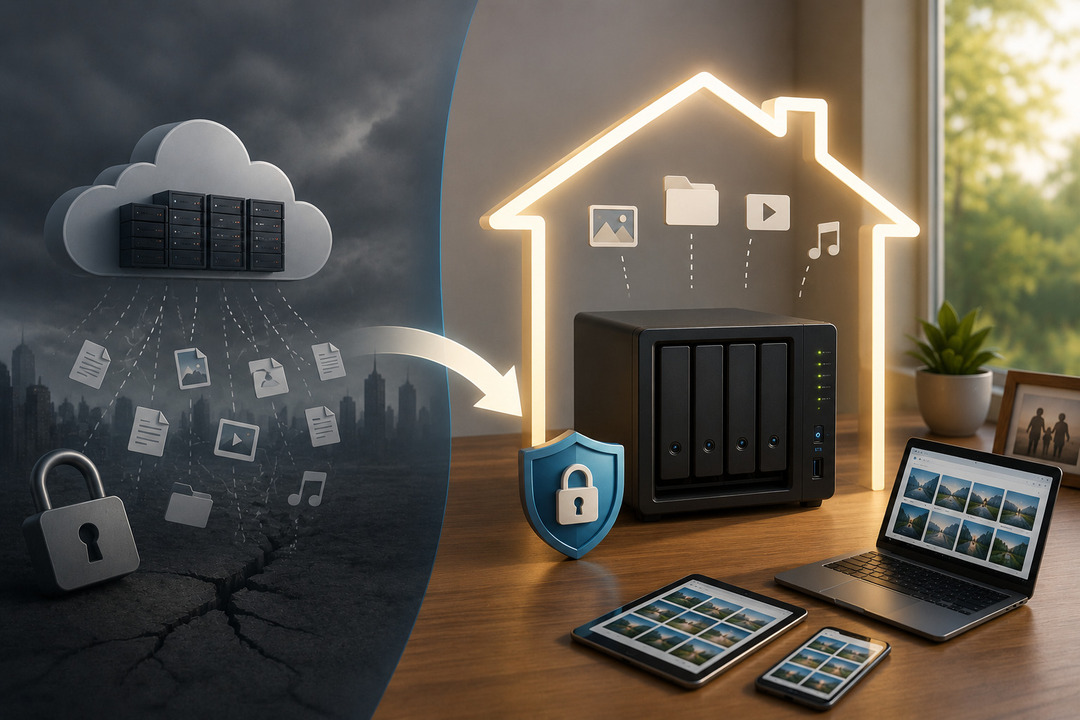
A private cloud storage solution takes a different approach. Instead of relying entirely on external infrastructure, users maintain ownership or direct control over the storage environment while still enjoying many of the benefits associated with cloud storage.
In simple terms:
Public cloud = rented storage.
Private cloud = owned storage.
More users now consider this distinction important as more people seek greater control over their digital assets, storage costs, and long-term access to their data.
Why Users Are Reconsidering Public Cloud Storage
Public cloud services continue to play an important role for individuals and businesses. However, changing user expectations and growing concerns around ownership are encouraging many people to explore alternatives.
Rising Subscription Costs
Cloud storage subscriptions often begin as a small monthly expense. However, storage requirements rarely remain the same.
Photos accumulate. Videos become larger. Backups expand. Business files multiply.
As storage needs increase, users frequently find themselves upgrading to higher-tier plans with larger recurring fees. While each upgrade may seem reasonable in isolation, the long-term cost can become significant over several years.
Rising costs are prompting many users to question whether renting storage indefinitely is the best approach. Many are choosing to set up their own cloud storage and invest in infrastructure they can continue using without ongoing subscription commitments.
Limited Control Over Data
When using public cloud platforms, users operate within policies and limitations established by the provider.
Storage limits, feature availability, pricing adjustments, and account requirements can change over time. While these changes may be necessary from a provider’s perspective, users often have little influence over them.
A private cloud storage solution reduces dependence on external decisions by giving users greater control over how their storage environment is managed.
Growing Privacy Concerns
As awareness around digital privacy grows, many users are paying closer attention to where their data is stored and who has access to it.
For some individuals and businesses, having greater visibility into their storage environment provides additional confidence in how their data is managed.
Increasing Demand for Digital Ownership
Beyond privacy and cost considerations, a larger shift is taking place: users increasingly want ownership over the technology they rely on every day.
Consumers are becoming more conscious of the difference between accessing a service and owning the infrastructure behind it. Whether it is software, media, devices, or data, many people are looking for solutions that offer greater control and long-term independence.
Cloud storage is part of that trend.
When users rely entirely on third-party platforms, they remain dependent on subscription plans, storage limits, pricing changes, and platform decisions. While these services provide convenience, they also place important aspects of data management outside the user’s control.
This is why more individuals and businesses are choosing to own cloud storage rather than continuously rent it. Ownership provides greater control over data storage capacity, accessibility, and long-term costs while reducing dependence on external providers.
For many users, the appeal of personal cloud storage is not simply where files are stored. It is knowing that the storage environment itself belongs to them.
Who Is Driving the Move Toward Personal Cloud Storage?
The growing interest in personal cloud storage is being led by users who create and manage large volumes of digital content.
Content creators need reliable storage for videos, raw footage, and project files. Photographers manage thousands of high-resolution images. Freelancers and consultants often work with sensitive client documents. Small businesses require centralized access to growing amounts of operational data.
For these users, cloud storage is no longer just about convenience. It is a critical part of how they work, collaborate, and preserve valuable digital assets.
Making Better Use of Existing Data Storage
One reason personal cloud storage is becoming more practical is that many users already own the hardware and data storage needed to get started.
Desktop computers, laptops, external hard drives, NAS devices, and other storage systems often contain unused capacity that can be repurposed for cloud storage. Rather than paying recurring subscription fees for additional space, users can make better use of the data storage they already own.
This approach allows individuals and businesses to create storage environments that align with their needs while maintaining greater control over where their files are stored and how they are accessed.
For many users, building a personal cloud is not about replacing existing hardware. It is about unlocking more value from the storage resources they already have.
Benefits of Choosing Your Own Cloud Storage
Complete Ownership of Your Data
Perhaps the greatest advantage of owning your cloud storage is ownership itself.
Users maintain direct control over storage resources, file organization, access permissions, and backup strategies. This reduces reliance on external providers and offers greater flexibility in managing data.
Predictable Long-Term Costs
Although setting up a personal cloud environment may require an initial investment, long-term costs are often easier to predict than recurring subscription fees.
For users with growing storage requirements, ownership can become increasingly cost-effective over time.
Greater Flexibility
Users can adapt a private cloud storage solution to meet their specific requirements.
Users can customize storage capacity, backup schedules, access permissions, and system configurations according to their needs rather than fitting within predefined subscription plans.
Your Storage Grows With You
Traditional cloud services often require users to upgrade plans as storage needs increase.
Your storage grows according to the capacity you own rather than a provider’s pricing tiers. As photo libraries, business data, creative projects, and backups expand, the storage environment can expand alongside them.
This provides greater flexibility and control over how storage capacity evolves over time.
Enhanced Privacy and Security Control
Security remains important regardless of the storage model you choose.
With a private cloud storage solution, users gain greater visibility into how they store, protect, and access their data. For many individuals and businesses, this additional level of control is a significant advantage.
Is Building Your Own Cloud Storage Complicated?
One common misconception is that creating your own cloud storage requires advanced technical knowledge or expensive infrastructure.
In reality, modern personal cloud solutions have made the process significantly more accessible. Users can now create private cloud environments that offer remote access, file synchronization, backups, and multi-device connectivity without the complexity traditionally associated with enterprise storage systems.
As a result, owning your storage is no longer limited to IT professionals or technology enthusiasts. Creators, families, freelancers, and small businesses increasingly view it as a practical option for greater control over their data.
Final Thoughts
Cloud storage is no longer just about convenience. Increasingly, it is becoming a question of ownership.
As data storage requirements continue to grow and subscription costs become a permanent part of digital life, more users are looking for alternatives that offer greater control and long-term value.
Choosing your own cloud storage allows you to decide where your data lives, how it is managed, and how your storage environment grows over time. Rather than continuously renting storage from a third-party provider, users can build solutions that align with their needs and make better use of the data storage they already own.
For creators, businesses, and individuals who value ownership, personal cloud storage offers a compelling alternative to traditional public cloud services.
FAQs
1. What is the difference between public and private cloud storage?
Public cloud is rented storage on a third-party server (where they control the rules and pricing). Private cloud is owned storage that you host, manage, and control entirely yourself.
2. Is a personal cloud cheaper than a public subscription?
Yes, over time. Public clouds charge recurring monthly fees that increase as your data grows. A personal cloud requires an upfront hardware investment but eliminates ongoing subscription fees.
3. Do I need advanced technical skills to set it up?
No. Modern personal cloud software and hardware are built for everyday users, making remote access and automatic backups straightforward without an IT background.
4. Can I use hardware I already own?
Yes. You can easily repurpose the unused capacity on your existing desktop computers, external hard drives, or old network storage devices to build your network.
5. Who benefits most from switching to a personal cloud?
Anyone seeking privacy, but especially heavy data users—like content creators, photographers, freelancers, and small businesses—who are tired of hitches in storage limits and pricing tiers.